Colorado’s unique climate and stunning landscapes make outdoor living a year-round enjoyment when your patio is built to perform and designed to impress. This guide offers practical design ideas, material suggestions, and maintenance tips so Colorado homeowners can create beautiful, durable outdoor spaces. Whether you’re upgrading a small backyard or planning a full entertaining area, these concrete patios ideas will help you get the look and function you want.
Why Choose Concrete Patiosfor Colorado Homes?
Concrete is an exceptional choice for Colorado homes because it handles temperature swings, resists wear from snow and ice when properly installed, and offers endless aesthetic options. With advances in staining, stamping, and sealing, concrete patios can mimic natural stone, brick, or tile while providing a low-maintenance surface that lasts decades. For homeowners seeking value and beauty, concrete patios are a smart investment.
Design Ideas That Work in Colorado
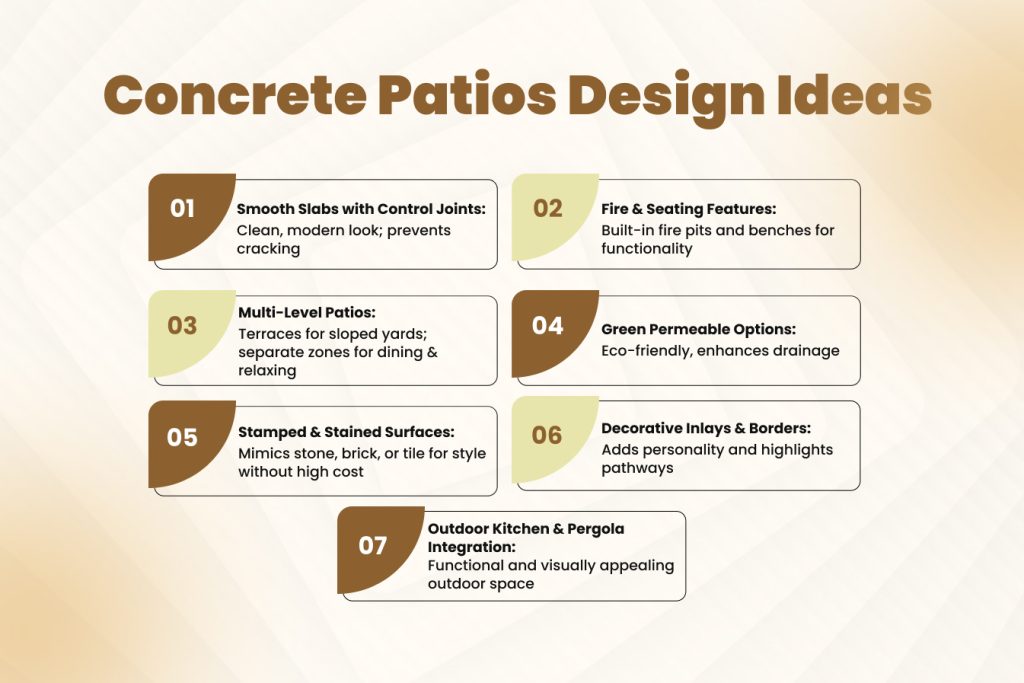
- Contemporary smooth slabs with control joints: A clean slab today with a brushed or broom finish will blend with the minimalist landscaping. The correct type of control joints helps to cut down on the cracking and enhances the durability.
- Fire and seating features built in: Construct low-profile walls of the seating or a fire pit in the middle of the concrete slab to allow a smooth transition of hardscape and furniture areas.
- Multi-level sloping lot patios: Pour concrete into sloping terraces in line with the grade of your yard. This will maximize the space available to be used, and it will generate specific spaces to eat, rest, and grow plants.
- Green permeable alternatives: Take into account a permeable concrete or ornamental paver fixed in a concrete frame that can enhance drainage and meet the current sustainability objectives.
- Stamped and stained surfaces: Stamping can be used to duplicate the texture of stone or pavers and can be applied to all colors with acid stains or integral pigments. Stamped concrete patios provide the appearance of natural substances without being expensive or difficult to install.
Finishes, Color, and Texture Options
Your finish choice defines the patio’s final look and how it performs. Popular finishes include broom, exposed aggregate, smooth trowel, and stamped patterns. Color options range from earthy tans and warm browns to cool grays that complement Colorado’s mountain palette. Decorative concrete patios can also incorporate inlays, borders, or contrasting bands to highlight transition areas and pathways.
Practical Considerations for Colorado Climates
Colorado’s freeze-thaw cycles and intense sun require a few specific design choices. Use air-entrained concrete mixes to resist freeze damage, and ensure proper slope and drainage so water moves away from the house. Select UV-stable sealers or pigments to reduce fading, and choose finishes that offer enough texture to prevent slipperiness when wet or icy.
Working With Contractors: What to Ask
When hiring professionals, request references and photos of completed work in similar climates. Ask about subgrade preparation, reinforcement methods, curing times, and warranty details. If you need help with permitting and site planning, look for an experienced concrete patios contractor who understands local codes and the particular challenges of Colorado soils. For a trusted service, search for a local concrete contractor to ensure proximity and responsiveness for site visits and follow-up.
Layout and Landscaping Integration
Design your patio as an extension of your indoor living space. Use large sliding doors, matched finishes, and coordinated lighting to blur indoor-outdoor boundaries. Integrate planting pockets, raised planters, and shrub borders to soften edges and add privacy. Consider built-in planters with concrete benches for a cohesive, low-maintenance solution.
Durability and Maintenance
Concrete patios are durable, but proper installation and maintenance extend their life significantly. Seal every two to five years, depending on sealer type and sun exposure. Repair minor cracks early to prevent spalling. Choose reinforcement like wire mesh or rebar for larger slabs and thicker edge pours to resist frost heave and settling.
Cost-saving and Budgeting Tips
Prices are according to complexity, finish, and scale. Basic broom finish slabs are cheap; stamped/stained/coloured slabs are expensive. To save, restrict complex patterns to high-visibility areas or mix concrete with pavers in modules to use as accent areas. In the case of full-service installations, get quotes on the same and compare the scope details, and not only the price.
Innovative Personality Accessories
Customize a concrete patio with some well-placed upgrades: inset tile patterns, custom stamped medallions, built-in lighting, or a polished concrete finish to give it an ultra-modern feel. Match your patio with an outdoor kitchen, pergola, and shade sail to make it more useful during sunny Colorado afternoons.
Environmental and Sustainability
Select low-VOC sealers and think about locally sourced aggregates to reduce embodied carbon. Porous concrete solutions minimize the surface waters and enhance groundwater infiltration. This is particularly applicable in properties where drainage is a serious factor.
Final Tips for Homeowners
Measure twice, and plan for use. The right layout depends on how you’ll live on the patio. Prioritize proper base preparation, adequate drainage, and a clear maintenance plan. If you’re ready to transform a backyard, consider scheduling a consultation for concrete patio installation to get an accurate quote and design plan tailored to your site.
Permits, Schedule, and Actual Project Flow
The beginnings of a successful concrete patio project include realistic expectations regarding permits and timeline issues. Simple permits and inspections are required in most Colorado cities on minor hardscape projects; larger patios with electricity or gas lines to install built-in appliances may also initiate further permits. The obvious project schedule is generally site preparation, forming and pouring, finishing, and curing. Each stage should be scheduled when the weather is suitable. Grant additional time in the spring and the winter shoulder seasons when temperatures or storms may impact the curing and timing.
5-Point Quick Table
| Item | Why it matters |
| Proper base & drainage | Prevents settling & freeze damage |
| Air-entrained mix | Resists freeze-thaw cracking |
| Reinforcement (mesh/rebar) | Controls crack width, adds strength |
| Finish choice (broom/stamp) | Balances aesthetics and slip-resistance |
| Sealing schedule | Extends life and color retention |
Selection of the Appropriate Materials and Reinforcement
The use of appropriate concrete mix, reinforcement, and edge details reduces future problems. Make air-entrained mixes with a suitable slump to resist freeze, and demand compacted under-slab material. Another option used to reinforce this material is welded wire mesh or rebar because it minimizes the chances of broader cracks and movement. To achieve a decorative appearance with homeowners who do not require custom pours, the blending of precast with poured slabs is a reasonable hybrid method, which nonetheless can provide a cohesive appearance.
Working With Multiple Trades
Outdoor life projects are commonly large projects, and may include landscapers, masons, and carpenters. Get concrete patios contractors and landscape professionals on board as early as possible to ensure that utilities, grading, and other structural features are in the right place. One contact point, usually the contractor, assists in avoiding conflicts in schedules and in avoiding messy edges between the hardscape and the planting areas.
Real-world Example
Visualize a medium-sized backyard in Denver that has been designed with a stamped primary patio, level walkway, built-in bench seating, and a miniature outdoor kitchen. Through drainage planning, picking UV-resistant sealers, and employing skilled trades, the homeowner was able to have a low-maintenance, very functional area, which not only provided true resale value to the property but also it was a well-dressed curbside.
Final checklist: confirm drainage and slope, verify materials and warranties, agree on cleanup and maintenance schedule, schedule final inspection to close the project confidently, and enjoy your outdoor space. For projects that blend hardscaping with carpentry, also explore Outdoor Deck Construction options to coordinate materials and transitions. At Omega Construction LLC, we deliver on every promise. From concrete flatwork to pumping, our skilled team guarantees quality and lasting results.
Call US at 719-459-8431 or ✉️ email dominique@omegaconstructiongc.com today for your free consultation. Together, let’s build something strong and lasting!
Frequently Asked Questions
How long does a concrete patiolast?
With good installation and maintenance, 25–50 years.
Do stamped patios crack more?
No, when properly reinforced and jointed, stamped finishes perform like plain slabs.
When is the best time to pour in Colorado?
Late spring to early fall for reliable temperatures; avoid freezes during curing.
Can concrete look like stone or brick?
Yes, stamping and staining mimic stone/brick affordably.
Do I need a contractor for permits?
Experienced contractors usually handle permits and inspections for you.